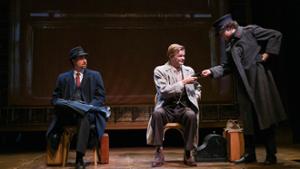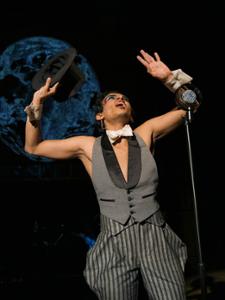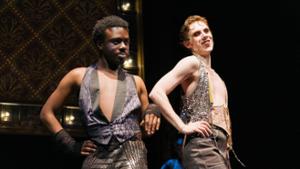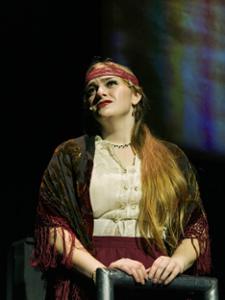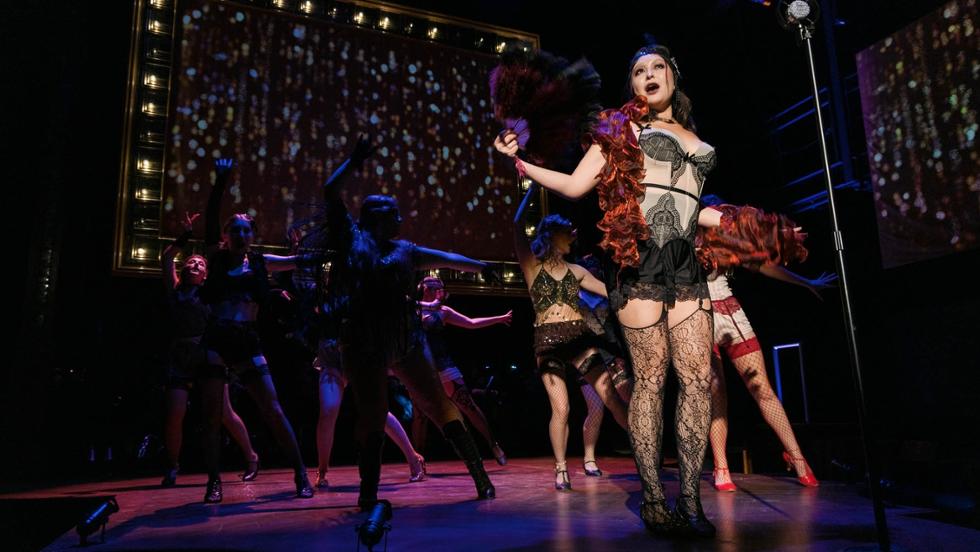
Sri Masturzo ’28 and Daphne Leibowitz ’29, two students who worked in the Costume Shop for this show, revealed insight into the process and artistic vision behind the vibrant, period-specific costumes onstage.
Photography by Amelia Beamish
Q
How did you start working on costumes for Cabaret?
Masturzo: I've worked on costumes, hair, and makeup for Mainstage previously because of my interest in crew for theatre in high school … Cabaret has some very maximalist wardrobes and it was different than any shows I had worked on in the past so I was very drawn to it.
Leibowitz: I started this year because I love Cabaret, and more specifically, I was excited to be a part of the team working on the intricate period costumes that the show is known for.
Q
How do the costumes establish 1930s Berlin setting, reveal character, and help tell the story?
Many of the costumes (even including some undergarments) are period-accurate. This involved deep dives into vintage resellers and specific fabrics that could have been worn in 1930s Berlin. The costumes illustrate the changing themes of the show and reveal underlying tension as the story progresses, especially through the use of color, promiscuity, and big reveals.
Q
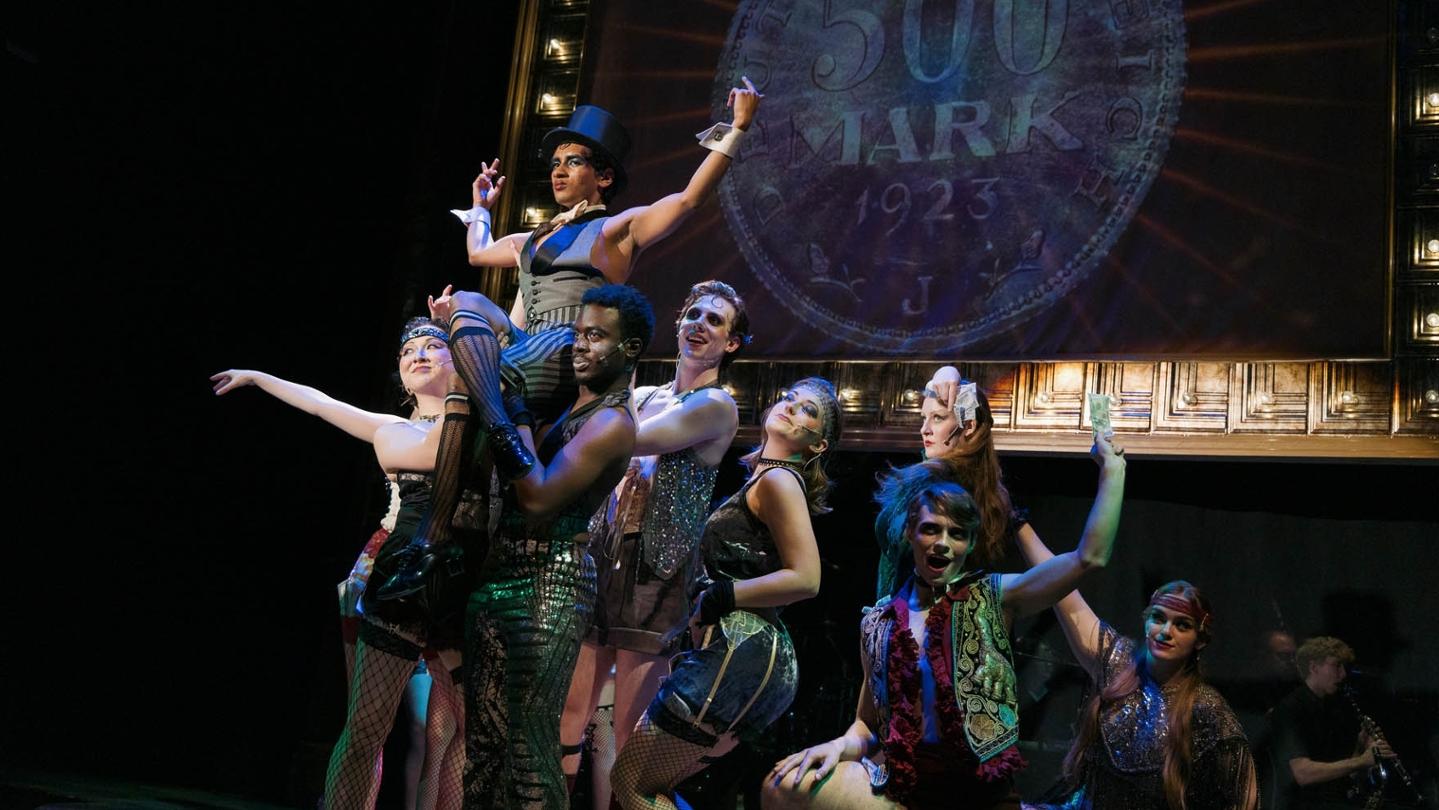
What was the overall vision for the costumes, and how did they contribute to the atmosphere of the show?
Our costume designer, Calypso Michelet, really wanted to emphasize the difference between two worlds: 1930s Berlin and its politics, and the fantasy escape from this world, the Kit Kat Club… The line between the two shifts and blurs throughout the show, which the costumes influence greatly.
Q
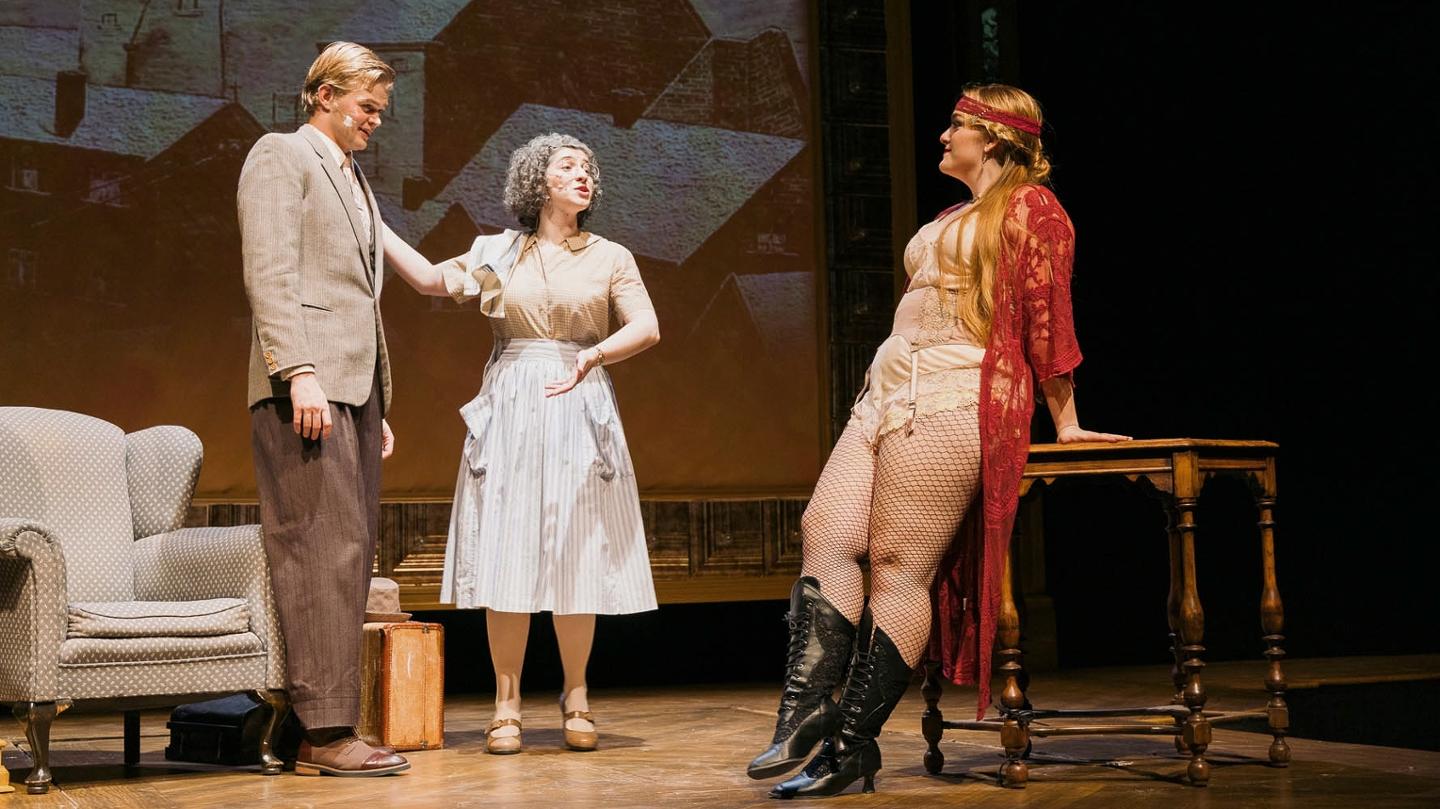
What, if any, challenges did you have in creating these?
We try to buy as many items as possible, so that the costume shop isn't overwhelmed with projects, but some clothing was impossible to find or was out of our budget, so we wound up making very unique clothing. This involved lots of tricky fabrics and improvisation for making pieces that we were unfamiliar with.
Q
How many different costumes were there?
There are 18 cast members, who each have at least 2 different costumes … Some of the stagecrew are also in costume, so that they blend in when setting the stage. This means we have over 50 individual costumes in the show.
Q
What was it like working in the costume shop for Cabaret?
 As our costume shop manager Sarah McCullough likes to say, it's a lot of “hurry up and then wait.” We have periods where we are behind and rushing to finish costumes and make repairs, and then periods where things are running smoothly and there isn't much to do. Leading up to the show, we mostly work on finding/making pieces and getting everything organized to make dress rehearsals and shows as easy as possible for the cast and crew.
During the show itself, the costume team is responsible for making sure everything is worn as it should be, helping with hair and makeup, doing laundry after shows, and performing quick-changes backstage.
The students summed up their experiences working on the show. Masturzo said: “Working on Cabaret has been chaotic but incredibly rewarding, and I’ve loved seeing all our hard work come to life onstage.” Leibowitz added, “My favorite part of working on Cabaret was hearing how much the community enjoyed it. I like knowing that I’ve been part of something so great for so many people!”
Posted November 23, 2026