First-Year Health Lab
The Health Lab gives a small cohort of first-year students the chance to explore health from every angle throughout their first semester at Hamilton.

Why Health Lab?
Health Lab is a semester-long program designed for students who are interested in health-related opportunities. That might mean medicine, public health, research, ethics, health policy, community care, environmental health, or another path not discovered yet. Check out the courses and how the weekly class schedule will look like.
Who Should Apply?
Students do not need to have set future plans to take part in Health Lab. Faculty members have designed this semester to help students ask better questions, discover new possibilities, and begin building a foundation for whatever comes next.
Health Lab may be a good fit for first-year students who are:
- Curious about health, medicine, science, and/or human well-being
- Interested in learning across disciplines
- Excited by discussion, writing, lab work, and hands-on experiences
- Open to exploring a variety of pathways in health
- Looking for a small academic community within their first semester
Program participants will:
- Build a foundation for health-related study at Hamilton
- Take common pre-health prerequisite courses, including biology and chemistry
- Explore health through science, history, writing, ethics, and human experience
- Learn in a small cohort of 16 first-year students
- Work closely with faculty and classmates
- Connect classroom learning with real-world questions and experiences
- Reflect on goals, values, and possible future paths
A Different Kind of First Semester
A thematic course exploring five fundamental features of all biological systems, including structure and function, information flow, energy and matter, interactions, and evolution. Cancer arises from the body’s own cells, gradually acquiring traits that allow them to grow uncontrollably and evade safeguards. In this course, we will investigate how normal cellular processes, such as DNA replication, gene expression, metabolism, cell signaling, and cell cycle, can be distorted during cancer development. We will also explore how the immune system recognizes (and sometimes fails to recognize) cancer cells, and how modern therapies attempt to restore homeostasis. This course has a required lab section.
Faculty: Elena Tonc, Assistant Professor of Biology (lecture); Nicole McDaniels, Associate Professor of Instruction in Biology (lab)
Exploration of the central principles and theories of chemistry including stoichiometry, thermodynamics, equilibrium, reaction kinetics, and molecular structure and bonding. For students intending to pursue post-graduate work in the Health Professions, this course satisfies the first semester of a one-year General Chemistry requirement. This course has a required lab section.
Faculty: Ryan Martinie, Assistant Professor of Chemistry
How do societies discover cures—and who benefits from those discoveries? This writing seminar examines how medicines derived from the natural world become scientific knowledge, commercial products, or sites of ethical and social debate. Students explore how healing substances move between communities, laboratories, corporations, and governments, raising questions about evidence, expertise, access, and responsibility. Through historical and contemporary case studies, the course addresses traditional and Indigenous medicine, drug development, environmental and public-health impacts, and intellectual property. Writing-intensive assignments build skills in analysis, argumentation, revision, and research across disciplines. No prior scientific or historical background required.
Faculty: Mackenzie Cooley, Associate Professor of History
Ethical questions surrounding health and medicine rarely have simple answers: the evidence can be uncertain, knowledge is historically situated, values can conflict, and decisions affect real lives. This first-year course explores how medical reasoning and decision-making depend on drawing from multiple forms of expertise, forms of evidence, and ways of knowing. We will explore human health through a multi-disciplinary lens, including the humanities, social sciences, natural sciences and arts. Students will learn how different disciplines and expertise shape our understanding of health and how we navigate difficult choices made within its context. By examining different roles and perspectives (patients and families, physicians, researchers, policy makers, and innovators), and how these roles have been defined and transformed over time, students will practice communicating across differences and building well-rounded ethical arguments that integrate multiple kinds of knowledge. Through case studies, discussion, and writing, students will build a flexible toolkit for thoughtful leadership in health-related fields.
Faculty: Natalie Nannas, Associate Dean of Faculty and Associate Professor of Biology
This physical education course focuses on developing lifelong habits of wellness through movement, self reflection, and mental health awareness. Students explore physical activity, stress management, mindfulness, and personal goal setting while examining how physical, mental, and emotional health are interconnected. The course encourages self care, resilience, and informed decision-making to support overall wellbeing and healthy living.
Faculty: Deidre Pierson, Associate Director of Athletics and Associate Professor of Physical Education, and Missy Mariano, Head Coach of Field Hockey and Associate Professor of Physical Education
Wednesday, Oct. 14–Friday, Oct. 16
Students will participate in a two-day immersive field experience designed to bridge the gap between classroom theory and clinical practice. By engaging directly with leading clinicians, medical researchers, and biotechnology pioneers, students will see firsthand how the concepts and skills mastered in the Health Lab translate into life-saving innovations within hospitals and the tech industry.
All expenses will be covered by the College.
The field trip is a required component of the Health Lab.
How It Works: Health Lab Schedule
BIO100: Explorations in Biology
9–10 AM
CHEM120: Chemistry Principles
10–11 AM
CHEM120 Lab
1–4 PM
BIO100 Lab
9–12 PM
PE157
1–1:45 PM
HIST134: Cures for the Earth
2–3:45 PM
BIO100: Explorations in Biology
9–10 AM
CHEM120: Chemistry Principles
10–11 AM
COLEG107: Medical Thinking
1–4 PM
PE157
1–1:45 PM
HIST134: Cures from the Earth
2–3:45 PM
BIO100: Explorations in Biology
9–10 AM
CHEM120: Chemistry Principles
10–11 AM
Meet the Faculty
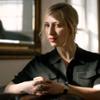

Missy Mariano
Head Coach of Field Hockey and Associate Professor of Physical Education




Deidre Pierson
Associate Director of Athletics and Associate Professor of Physical Education

The First-Year Health Lab is made possible by the generosity of the Levitt family and The Winston Foundation and is supported by Hamilton’s Levitt Public Affairs Center.

Help us provide an accessible education, offer innovative resources and programs, and foster intellectual exploration.