Necrology
Because Hamilton Remembers
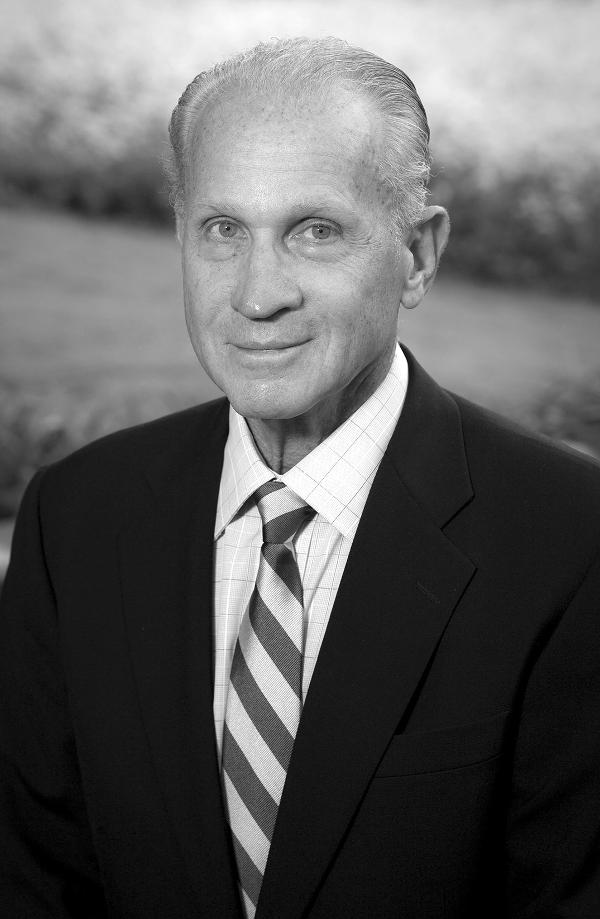
Howard Joel Schneider '60
Feb. 23, 1938-Feb. 16, 2026
Howard Joel Schneider ’60, P’85,’87,’89, GP’21 died on Feb. 16, 2026, at his home in Palm Beach, Fla. Born in Newark, N.J., on Feb. 23, 1938, he came to Hamilton from Weequahic High School where, among other activities, he played football on the varsity team beginning in ninth grade and was voted onto the all-city team as a senior. Awarded a full scholarship, he came to the College determined to become a doctor.
On the Hill he was a member of the Emerson Literary Society, majored in biology and chemistry, and played tackle on the football team all four years. His athletic timing could not have been better because in his junior year (1958), he was a member of Hamilton’s undefeated team. The next year he was elected co-captain. He was also a member of the Block “H” Club throughout his time on the Hill. His other interests included the Biology Club, which he joined all four years, as well as working on the staff of The Spectator as a sophomore and on WHC (now WHCL) as a junior. He also played intramural ice hockey.
In his senior year, Howie met Sandra Esther Silverman, then a student at Connecticut College for Women. On June 27, 1961, they were married in Newark, N.J. They would have three sons and a daughter; three of their children would graduate from Hamilton.
Howard’s medical education began at the University of Rochester Medical School where he earned his M.D. in 1964. The previous year he had joined the U.S. Army Reserves and served until 1970, when he was honorably discharged with the rank of captain.
After medical school, Howard entered an internship in general surgery at Albert Einstein College of Medicine in New York City. It was there that he decided to specialize in ophthalmology and trained with a leader in the field of ophthalmic surgery, Dr. Ramón Castroviejo. A pioneer of corneal transplants, Dr. Castroviejo became an important mentor to Howard. He took his residency in the ophthalmology department of Northwestern University Medical School in Chicago, graduating in 1967.
Returning to New York that same year, he made his home in Harrington Park, N.J., and joined the staff of St. Vincent Hospital in Manhattan. He subsequently became an attending surgeon at Mount Sinai Hospital. He also established a private practice with Dr. Castroviejo, a partnership that lasted until 1973 when the latter retired and returned to his home country of Spain.
Howard performed corneal transplants and complex procedures treating cataract, glaucoma, and strabismus (to correct the problem of a patient’s eyes not being properly aligned). He also developed an artificial cornea that could be successfully transplanted into badly damaged eyes and introduced refinements in transplant techniques and specialized sutures that improved surgical outcomes. In keeping with his belief that medicine exists to serve patients, he declined patenting his innovations so as to make them more readily available for colleagues to employ.
His practice flourished in part because of his skills and also because he was generous in his service. In reflecting on his partnership with Howard, a younger practitioner said: “We saw children and adults. We saw ‘fancy people’ and people who just needed help. He never wanted to turn away anyone who could benefit from his skills.” If a patient was a veteran of the Vietnam War, Howard treated them at no charge. He also provided training for surgeons from around the world through the Castroviejo-Schneider Eye Surgery Foundation that he established in 1990.
As is true with many alumni, for Howard, Hamilton was among the most important experiences of his life, and he served the College in many ways to acknowledge the value of his time on the Hill. While his early contributions were small, as his practice began to flourish, they grew significantly.
He donated generously to several capital campaigns including the 175th Anniversary Campaign, the Campaign for the ’90s, and the bicentennial campaign. In honor of his father-in-law, he and Sandy established the Jack Silverman Memorial Scholarship for a student in need.
Beyond those special gifts, Howard was a regular donor to the Hamilton Fund. These gifts were both unrestricted so as to benefit the whole College and also were directed more specifically: he supported the football and hockey teams; celebrated Sidney Wertimer’s distinguished career by contributing to the establishment of the Sidney Wertimer Professorship; and gave to the Mac Bristol Scholarship, among others. In addition to these regular contributions, Howard also included Hamilton in his estate plans as a Joel Bristol Associate.
Howard served the College directly as well. He and Sandra were members of the parents committee, which he chaired during the 1987-88 academic year. In 1988, he was elected to a four-year term as alumni trustee. In 1993, he became a charter trustee and was re-elected to that position in 1999. Finally, in 2005, he became a life trustee. He also played an important role in establishing the position of coordinator of health professions advising to assist students planning to go to medical school.
Howard was a regular visitor to the campus, not only for trustee meetings but also for other events of importance, including Homecoming Weekend, dedications of new and renovated buildings, as well as the occasional football game. The Schneiders regularly attended events in New York City including 1812 Leadership Circle weekends and also get-togethers four times a year with ELS fraternity brothers and their partners.
Though they had lived principally in Manhattan since 1984, Howard and Sandra also maintained second homes in Connecticut and Florida. By 2010, they were spending more time in their home in Sherman, Conn., after Howard had to give up surgery as a result of shoulder deterioration requiring total replacement. He continued to consult, however, commuting into the city a couple of days a week. Winters were spent in Palm Beach, Fla.
Howard fully retired in 2016 and, in the summer of 2017, he and Sandra moved to Clinton, surmising that at that point in their lives they had more friends there than anywhere else. In 2020, they relocated to Palm Beach permanently.
As busy as he was, Howard did make time for other interests. He played tennis regularly and was engaged in photography. Throughout his career, he also had an interest in home real estate.
Howard said Hamilton was “the best thing that ever happened to me.” In his 40th reunion yearbook, he wrote: “Taking chemistry, physics, and biology with long labs and playing football at the same time was probably more work than I bargained for, but with the encouragement from Dean Tolles, I felt that I wasn’t going it alone. To this day, I feel I have the support and affection of those around me.” In his 50th reunion yearbook, he added: “The Honor System had a profound effect on me and morphed into doing the right thing, leading without looking for consensus, and respecting the intelligence and will of others.”
Howard J. Schneider is survived by his four children, including Ian Schneider ’85, Dr. Melissa Schneider ’87, and Evan Schneider ’89; four grandchildren, including Julian Schneider ’21; and niece Melissa Wilson ’17. Sadly, Howard’s wife, Sandra, died just a few weeks after his passing.
Note: Memorial biographies published prior to 2004 will not appear on this list.
Necrology Writer and Contact:
Christopher Wilkinson '68
Email: Chris.Wilkinson@mail.wvu.edu

The Joel Bristol Associates
Hamilton has a long-standing history of benefiting from estate and life payment gifts. Thoughtful alumni, parents, and friends who remember Hamilton in their estate plans, including retirement plan beneficiary designations, or complete planned gifts are recognized and honored as Joel Bristol Associates.
Contact
Office / Department Name
Alumni & Parent Relations
Contact Name
Jacke Jones
Director, Alumni & Parent Relations
