Necrology
Because Hamilton Remembers

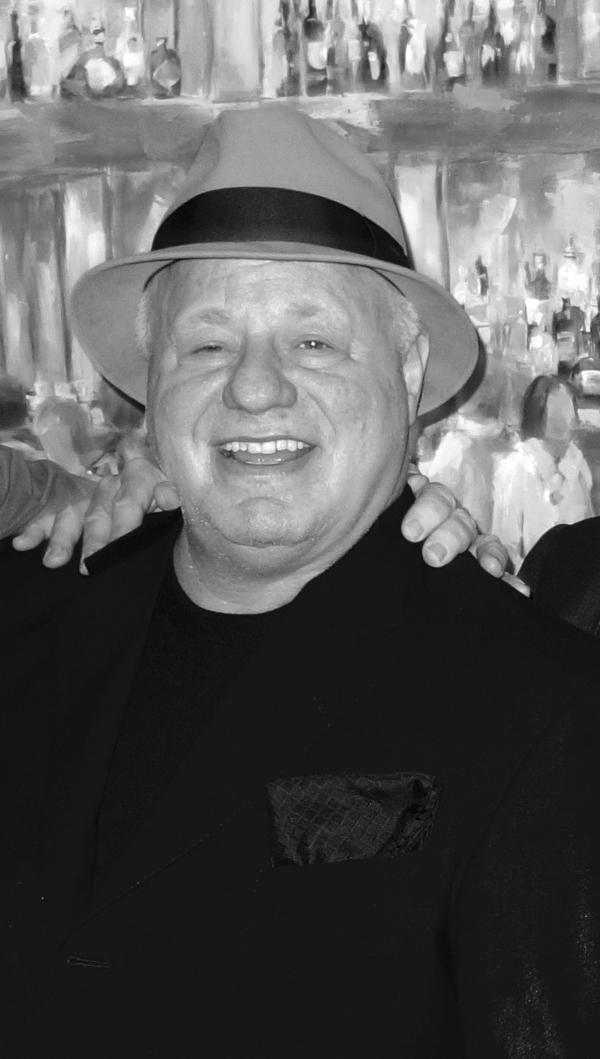
Bruce Cutler '70
Apr. 29, 1948-Oct. 5, 2025
Bruce Cutler ’70 died in Brooklyn, N.Y., on Oct. 5, 2025. Born in the Borough Park neighborhood of Brooklyn on April 29, 1948, and raised in Flatbush, he graduated from Poly Prep Country Day School, where he played football and captained the team in his senior year. Upon arriving on the Hill, Bruce joined the football team, playing either offensive guard or tackle, and in his senior year he was a co-captain. He was also on the lacrosse team for three years, playing defense beginning as a sophomore. A member of Delta Kappa Epsilon fraternity, he majored in government in preparation for law school.
From Hamilton, Bruce returned to Brooklyn, taught for a year in the Brooklyn public schools, and then attended Brooklyn Law School. After completing his degree, he joined the district attorney’s office in that same borough. Specializing in murder lawsuits, he prosecuted more than 50 cases between 1974 and 1981 and rose to be senior supervising attorney in the homicide bureau.
Among those cases was one in which a group of Hasidic men were charged with assault. Representing the defendants was Barry Slotnik, a well-known criminal defense attorney whose previous clients had included politicians, prominent mafiosi, and Bernard Goetz, who had shot four young Black men he claimed were trying to rob him while riding the subway. Slotnik won an acquittal for Goetz in a case that dominated press coverage at the time, raising Slotnik’s profile at the defense bar, and he also won an acquittal for his Hasidic clients. Although Bruce was on the losing side, Slotnick soon after proposed they form a partnership, and so Slotnik & Cutler was established in 1981. It eventually dissolved and Bruce would practice on his own four years later.
Early in 1985, an alleged capo in the Gambino crime family named John Gotti was indicted under the Racketeer-Influenced and Corrupt Organizations Act (RICO) for loansharking, hijacking, bookmaking, and armored car theft. He was not alone. Also indicted was Aniello Dellacroce, allegedly the underboss of the Gambino family then led by Paul Castellano. He was, in a sense, Gotti’s patron. In court Slotkin represented Dellacroce, and Bruce represented Gotti. Gotti and Bruce hit it off, beginning a relationship that lasted until Gotti’s death in 2002.
Some months after the arraignment, Dellacroce died of cancer. Two weeks later, Castellano was gunned down as he was exiting a limousine in front of Sparks’ Steakhouse, a midtown Manhattan restaurant. Gotti assumed control of the Gambino crime family.
The RICO case began in April 1986, in what would be the first of four trials of John Gotti on these or similar charges. Bruce represented him in the first three, and at the end of each of those trials Gotti was acquitted. By this time, the well-dressed and groomed Gotti, hitherto known as the “Dapper Don,” acquired a second epithet thanks to Bruce’s representation: “the Teflon Don.”
In the course of those trials, Bruce would later recount, he became captivated by Gotti. He began to dress like Gotti, in custom-made Italian suits and shirts. Observers noted that he began talking like Gotti and was seen at clubs frequented by mafiosi. He also began kissing his clients on both cheeks by way of greeting them.
Looking back on this time in his life in his memoir, Closing Argument: Defending (and Befriending) John Gotti and Other Legal Battles I Have Waged (2003), Bruce wrote that by the time the first of the four trials began, “I was already thoroughly imbued with John’s credo, his feelings about life and the government’s case. I had no need of instruction or direction in summation — as I stood before the jury, I was John Gotti.”
Friends in the legal profession reportedly became concerned that Bruce was getting too close to his client, reminding him that he was a lawyer, not a mafia consigliere. Bruce was unmoved and eventually his apparent close affiliation came to affect his career.
For many observers, in the press and among his fellow lawyers, Bruce’s conduct at trial was remarkable. “Theatrical outrage” was how one reporter described it. In the first Gotti trial, Bruce held up a copy of the indictment, describing it as “rotten to the core,” and told the jury that it could reject the indictment, whereupon he wadded it up and threw it in a wastebasket. In another case, Bruce was accused of bullying the jury to reach an acquittal. Witnesses for the prosecution were treated to famously intimidating cross-examinations, hectoring language, and sneering insinuations delivered at a full-throated shout — they came to be known as “Brucifications.”
The basis for the fourth Gotti trial was the charge that he had in fact ordered the murder of Paul Castellano in order to take control of the Gambino operation. Anticipating another encounter with Bruce and drawing on voluminous wiretap recordings, the prosecution persuaded a federal judge to disqualify him from representing Gotti.
There seem to be three versions of the events leading up to this result. The first is that the prosecution argued that the secret recordings suggested Gotti had ordered Bruce to tell an associate to leave himself open to a contempt charge rather than testify before a grand jury. Five days later, that associate refused to testify. Bruce was accused of witness tampering.
Overlapping with the first version, prosecutors convinced the judge that Bruce had been present when crimes were being discussed and might therefore be called as a witness, thus making him ineligible to represent Gotti. Bruce was never called.
The third version concerned disparaging remarks Bruce made to reporters about the trial that violated a court “gag order” barring attorneys from making statements that had a “reasonable likelihood” of prejudicing the outcome of the case. One of the targets of Bruce’s wrath was the presiding judge, I. Leo Glasser. Bruce claimed his controversial statements would have no impact on Gotti’s trial because they were made five months before the trial date.
Bruce was disqualified and was subsequently found in contempt of court, a verdict upheld on appeal. In its ruling, the appeals court stated that Bruce’s statements “were dipped in venom and were deliberately couched to poison the well from which the jury would be selected.” He was ultimately sentenced to 180 days of house arrest and barred from practicing law for six months in the U.S. Department of Justice’s Southern District of New York.
John Gotti was convicted of murder and racketeering. Sentenced to life in prison, he was confined in a supermax facility where he lived in solitary confinement for 23 hours a day for more than six years. He was reportedly denied medical treatment for the cancer that would cause his death in 2002.
In the meantime, Bruce returned to his legal practice following his six-month suspension. He acknowledged that some might find his conduct offensive: “impatient, too loud, too emotional, and totally disorganized.” He continued to represent controversial clients, including defending John Gotti, Jr. against a racketeering charge in 1998. Once again, the prosecution objected to his role as defense counsel, but this time a federal judge ruled in Bruce’s favor. The New York Times described Bruce at the preliminary hearing in colorful fashion: “Mr. Cutler beamed like a salesman, gladhanded colleagues and reporters, and cheek-kissed his manacled client in the time-honored way.”
From then until 2001, Bruce kept a lower profile. In fact, he was for a time among the best-known criminal defense lawyers in the country and a recognizable public figure. In 2001, he played himself in the film 15 Minutes, directed by Robert DeNiro.
In 2004, music producer Phil Spector was accused of murdering a woman in his home the previous year. Bruce flew out to Los Angeles to be his lead defense counsel but left the case in 2007 after a disagreement with his co-counsel over legal strategy. In 2009, Spector was found guilty and died in 2021 while in prison. In 2014, Bruce appeared in the television show Blue Bloods. Sometime thereafter, suffering from diabetes and kidney disease, his health declined progressively.
Bruce was married twice, but both unions ended in divorce. A subsequent relationship led to the birth of his son.
Bruce lent his financial support on different occasions to the Hamilton Fund; the College’s men’s basketball, football, lacrosse, and hockey teams; the renovations of Steuben Field and the chemistry building; as well as the Lieutenant Michael Cleary ’03 Scholarship and the Career Center. He returned to campus on various occasions, including the 50th anniversary of the 1967 football team that went 6-1 and defeated Union College 15-10.
His classmate and friend John Pitarresi ’70 memorialized him thus: “He was a true Hamiltonian, a great, reliable, and talented teammate, and an extremely generous and loyal friend. … There was nobody like Bruce Cutler on the Hill in our time, or maybe ever. And there is not likely to be ever again.”
Bruce summed up his life a bit differently: “It’s Brooklyn, it’s policemen, it’s reputed gangsters, it’s government witnesses, it’s federal prosecutors, it’s Brooklyn D.A. people, it’s detectives, it’s the F.B.I., it’s the D.E.A. Everything!”
Bruce Cutler is survived by his son and two brothers.
Note: Memorial biographies published prior to 2004 will not appear on this list.
Necrology Writer and Contact:
Christopher Wilkinson '68
Email: Chris.Wilkinson@mail.wvu.edu

The Joel Bristol Associates
Hamilton has a long-standing history of benefiting from estate and life payment gifts. Thoughtful alumni, parents, and friends who remember Hamilton in their estate plans, including retirement plan beneficiary designations, or complete planned gifts are recognized and honored as Joel Bristol Associates.
Contact
Office / Department Name
Alumni & Parent Relations
Contact Name
Jacke Jones
Director, Alumni & Parent Relations
