Necrology
Because Hamilton Remembers

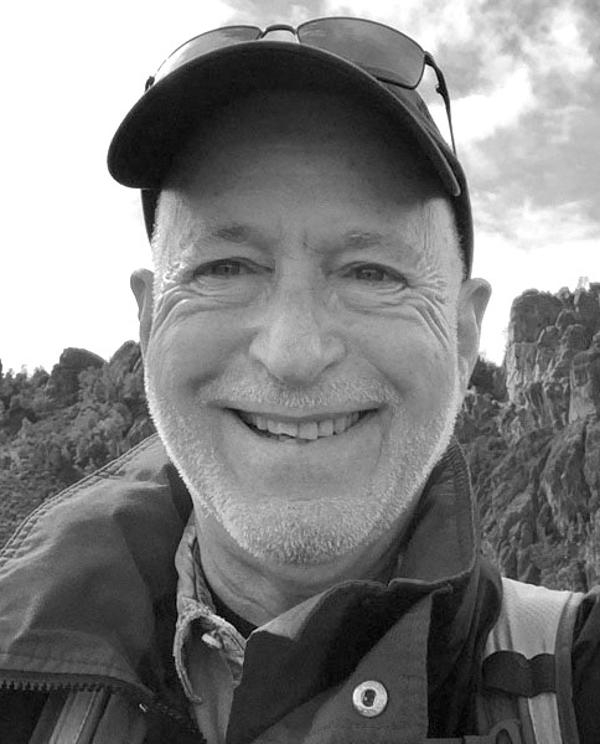
Daniel Mark Siegel '67
Jul. 20, 1945-Jul. 2, 2025
Daniel Mark Siegel ’67 died on July 2, 2025, in Oakland, Calif., his home since the 1970s. Born in the Bronx on July 20, 1945, he grew up in the village of Bayville on the north shore of Long Island and came to Hamilton from Locust Valley High School.
On the Hill, Dan majored in religious studies, though for a time he contemplated a double major in religious studies and philosophy. While in high school, he had been active in both the student newspaper and yearbook, so it was natural that he joined the staff of The Spectator in his first year, becoming sports editor as a sophomore, assistant editor as a junior, and executive editor as a senior. As a junior, he was also editor-in-chief of The Hamiltonian. Under his leadership, the yearbook was published on time and was widely regarded as among the best editions of that period. Dan joined the honorary journalism fraternity, Pi Delta Epsilon; in his junior year he served as the College’s chapter president. He also played on the football team as a freshman and junior, and was a member of the Charlatans during his first two years.
Dan had a deeply developed sense of social justice that would determine the course of his life and career. At Hamilton, as the Civil Rights movement was in full bloom, he became a member of the Friends of SNCC (the Student Non-Violent Coordinating Committee) as a sophomore and remained affiliated with it through his junior year.
Graduating with honors in religious studies, Dan joined the staff of the Quincy [Mass.] Patriot-Ledger but quit several months later after the paper refused to print his column arguing for the media to call Mohammed Ali by his chosen name. He then moved to Berkeley, Calif., to attend the University of California’s law school. As early as his senior year in high school, he had contemplated becoming a lawyer, and his interest was heightened after he was arrested in Mississippi while working with CORE (the Congress on Racial Equality) to register Black voters. He was released thanks to the efforts of a National Lawyers Guild attorney.
In 1968, Dan met Anne Weills, another law student, whom he would later marry. She too was an activist. They both participated in demonstrations against the Vietnam War, for civil rights, and more broadly against imperialism and fascism.
Dan’s high level of visibility led to a confrontation with Governor of California Ronald Reagan. In the spring of 1969, students and other members of the Berkeley community had created what they called “The People’s Park” on a block of vacant land owned by the university. Planning to create a parking lot on the site, the university had it fenced off. Soon after, students gathered to protest the move in Sproul Plaza on the Berkeley campus.
Speaking to the assembled crowd in his capacity as incoming president of the Associated Students of the University of California, Dan urged those present to take back the park. He also cautioned them: “Don’t let yourselves get arrested for felonies.” As people headed toward the park, they were met by police firing shotguns loaded with bird shot, resulting in the death of one man, the blinding of another, and dozens of serious injuries. In response to the demonstration, the governor sent National Guard troops to enforce a curfew and banned public assemblies. Dan was among those arrested and was charged with inciting a riot. He was nearly expelled.
Having received his Juris Doctor in 1970, Dan applied for admission to the California Bar Association but was rejected for lacking appropriate moral character stemming from the content of three speeches he gave on campus, following an investigation by the bar association reportedly initiated by Governor Reagan.
Dan sued, and in 1973, in the case Siegel v. Board of Examiners, the California Supreme Court sided with Dan: participation in protest movements was not a sign of deficient “moral character.” By the time of his admission to the California State Bar, Dan had already joined the National Lawyers Guild and subsequently modeled his career on that of the attorney who had aided him in Mississippi.
Dan’s first case involved a dozen American sailors accused of going AWOL in the Philippines during the Vietnam War, to which they had reportedly expressed opposition. To meet his clients, he had to fly to Manilla and try the case aboard a ship moored at the Subic Bay Naval Base.
It was also in 1973 that Dan and Anne began a long-term relationship that led to their wedding in August 1975. The couple’s reputation for activism was apparently noteworthy enough that a later Freedom of Information Act search revealed an FBI informant was among the attendees.
Leaving Berkeley, they settled in neighboring Oakland, one reason being that it was a more working-class community. There, Dan opened the Fruitvale Law Collective in what had formerly been a beauty parlor and quickly developed a reputation as a highly effective advocate. After demonstrating his skills as a trial lawyer in a case against the city and county of San Francisco, Dan was recruited in 1987 to head the litigation department of the San Francisco City Attorney’s Office. In that role, he settled a 17-year-old case alleging discrimination in the city’s fire department; the outcome guaranteed affirmative action in hiring and promotions for women and people of color.
In Dan’s obituary, Sam Whiting, a reporter for the San Francisco Chronicle, summarized his career as follows: “As a plaintiff’s attorney, Siegel would represent any individual battling an institution. No case was too small and no opponent too big. He was a champion of the worker, be it a picker or professor. He took up many tenure fights when discrimination was alleged and was always eager to take up the cause of a female college sports coach who had been driven out of her job.”
Dan and Anne represented numerous faculty members in discrimination and workplace retaliation suits. In 2007, he won two of the largest judgments ever awarded in cases brought under Title IX of the Civil Rights Act, which forbids discrimination based on sex and requires gender equity in higher education.
As early as 1992, Dan felt that, while his work was very lucrative, it was no longer fun. He branched out, serving as a commissioner of the Oakland Housing Authority, becoming general counsel for the Oakland Unified School District handling matters concerned with school safety, labor negotiations, fiscal crises, and, as he put it in his entry in the Class of 1967’s 25th reunion yearbook, “litigation over absolutely everything.” In 1998, he was elected to the first of two terms on the city’s school board. All this time, he continued to advocate for poor and working-class clients, although there were more than he alone could represent. In 1994, he joined with three other attorneys to found the law firm of Siegel, Yee, Brunne & Mehta, which continues to flourish. Dan never retired.
The depth of his commitment to social justice was summarized by Whiting in his obituary: “If there were arrests at actions in Berkeley or Oakland, he could be counted on to make the [100-mile] drive to Santa Rita jail and argue for bail.” Dan represented workers building pipelines in Alaska; canning food in Watsonville, 90 miles south of Oakland; and repairing naval ships in San Diego. More recently, he represented pro-Palestinian activists who stopped traffic on the Bay Bridge to protest the war in Gaza. Not surprisingly, much of this work was pro-bono when representing the homeless, students, prisoners, or low-income workers.
Even after being diagnosed with Stage 4 lung cancer, Dan continued to accept cases on behalf of the powerless. These included prisoners who were not being paid for work in the Alameda County jail, Black prisoners singled out for reading Black Lives Matter literature at Soledad State Prison, and a wrongful death suit in federal court on behalf of the wife and children of a former mayor of Berkeley.
Dan’s community engagement was diverse. For a time, he chaired the Oakland Housing Authority, co-authored Oakland’s community policy law, and taught graduate courses at Mills College. His final public appearance came on June 14 when he exhorted a crowd assembled in Oakland’s Oscar Grant Plaza at a “No Kings” rally to oppose the Trump administration and, as he put it, “the white supremacist organizations supporting his presidency.”
Dan did enjoy a life outside the law. He coached the Little League teams on which his son, Mark, and stepson, Christopher, played. Skiing, backpacking, and traveling abroad, including to destinations in southeast Asia and eastern Europe, were also favorite family activities.
For Dan, his time on the Hill was extremely important. As he recalled in his 50th reunion yearbook: “Hamilton taught me to read, write, and think critically. After four years on the Hill, everything else has been a breeze.” He gave back by supporting the Hamilton Fund, the bicentennial capital campaign, the Sidney Bennett Scholarship, and other initiatives to support diversity, equity, and inclusion. He also volunteered on the Priorities for Hamilton capital campaign, as a Career Center volunteer, as a class committee member, and as a reunion gift committee member.
Daniel M. Siegel is survived by his wife, two sons, and three grandchildren.
Note: Memorial biographies published prior to 2004 will not appear on this list.
Necrology Writer and Contact:
Christopher Wilkinson '68
Email: Chris.Wilkinson@mail.wvu.edu

The Joel Bristol Associates
Hamilton has a long-standing history of benefiting from estate and life payment gifts. Thoughtful alumni, parents, and friends who remember Hamilton in their estate plans, including retirement plan beneficiary designations, or complete planned gifts are recognized and honored as Joel Bristol Associates.
Contact
Office / Department Name
Alumni & Parent Relations
Contact Name
Jacke Jones
Director, Alumni & Parent Relations
